

Latest News
How do we address diverse beliefs in the classroom?
Australia's increasing religious and cultural diversity presents both an opportunity and a challenge and classrooms are where this reality is most visible — and most urgent.
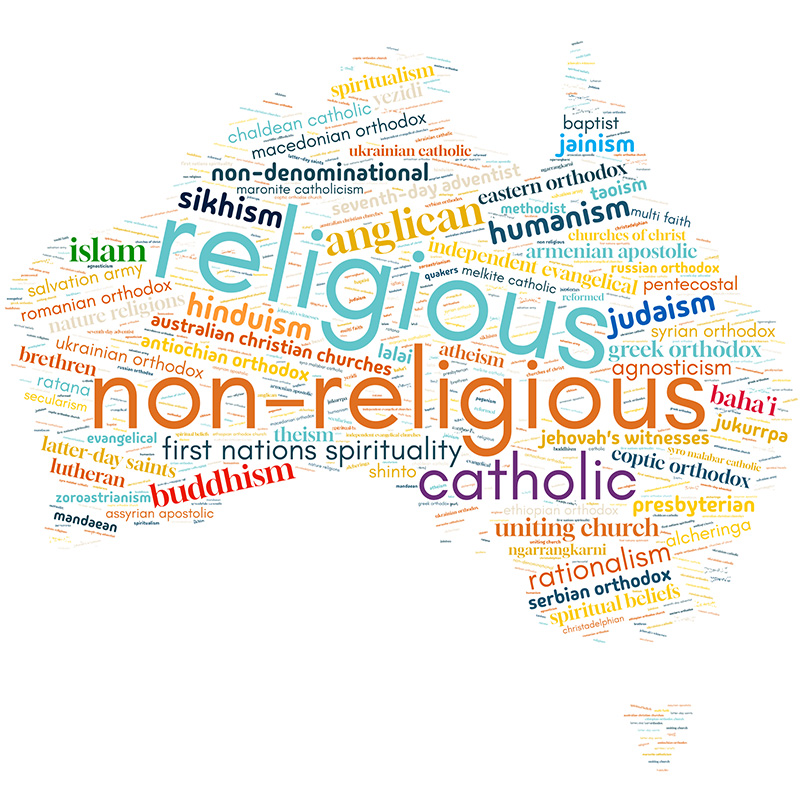 Teachers recognise that religions and worldviews shape the lives of many of their students, yet many feel under-equipped to address these topics with confidence. With increasing curriculum demands, administrative pressures and complex behavioural challenges, engaging thoughtfully with religion can feel daunting. And this is not limited to any one sector. Across government, independent and Catholic schools alike, leaders and educators are asking the same question: how do we best prepare young Australians to live well in a religiously diverse society?
Students encounter diverse beliefs and worldviews daily, yet many lack the knowledge and frameworks needed to engage with them respectfully and thoughtfully. Recent national and global developments have made this gap harder to ignore. Rising Antisemitism and Islamophobia, alongside escalating geopolitical conflicts and tensions, are increasingly shaping school environments. The current Royal Commission into antisemitism and the Australian Human Rights Commission's National Anti-Racism Framework both underscore the need for sustained, preventative approaches that build understanding, reduce prejudice and strengthen social cohesion across Australian society.
Education is central to this task as the front line and the long-term answer. But only if we equip it properly.
The evidence for religions and worldviews education
Recent surveys by Halafoff et al. (2020) found that students who had received education about other Religions and Worldviews demonstrated significantly more positive views toward Australia's religious minorities. By contrast, students who had received no religious education were approximately twice as likely to hold neutral or negative perceptions — even when controlling for age, gender, school type, socio-economic background and religious identity. The findings suggest that structured engagement with religion in the classroom is associated with greater social inclusion and reduced prejudice.
If young Australians are to live well in a religiously diverse society, they must be formed not merely in tolerance, but in understanding. Generation Z's openness suggests that such formation would not be imposed upon them but welcomed.
Research into student wellbeing reinforces this further. A strong sense of belonging is closely linked to academic success and mental health. When students feel seen and respected, they flourish. Religious literacy, delivered with care and rigour, can contribute to that belonging by equipping students to navigate difference with confidence rather than fear.
In his 2025 Lowy Lecture, ASIO Director-General Mike Burgess put the challenge with striking clarity:
"You cannot spy your way to greater cohesion or arrest your way to fewer grievances. It requires a whole of community, whole of society response… Every one of us has a role to play protecting our social cohesion. In an age with unprecedented avenues for communication, I fear we are losing our ability to converse — or at least losing the ability to converse with civility, debate with respect, disagree with restraint. To have an exchange of ideas rather than an exchange of diatribes or slogans or rhetorical blows. To be right without being righteous. To compromise."
It is difficult to imagine a more concise articulation of what religions and worldviews education is designed to build.
Religions and Worldviews Pilot Program
The Religions and Worldviews Education (RWE) initiative is a framework that supports students to explore the religious and non-religious worldviews that shape both Australia and the world by reflecting on their own perspectives and learning to respectfully engage with others - skills that are essential for all citizens in our diverse, democratic society.
We have developed and are now piloting a new 8-lesson module, situated within Civics and Citizenship (Humanities) and integrating the Capabilities, though many independent schools have found the lessons a useful addition to their existing values/ethics curriculum. This module has been developed through a Multifaith Education Collaboration (MFEC), auspiced by the Faith Communities Council of Victoria (FCCV), led in partnership with Faith Values, and is supported by the Templeton World Charity Foundation.
Further consultation for this initiative has come through engagement with the Victorian Department of Education, VCAA, ACARA, Office of Community Cohesion, Parents Victoria, Australian Multicultural Foundation, Centre for Multicultural Youth and Together for Humanity.
The RWE approach is illustrated in a short two-minute introductory video titled “Nobody Stands Nowhere”, which forms part of the pilot and helps students understand that no one approaches the world from a neutral position. For more information about us, see our website: www.reworldviews.org.au.
It works upstream, cultivating the social dispositions that make hatred and division less likely to take hold in the first place. This is not supplementary content. It is foundational citizenship education.
This work is supported by a growing research base. The University of Melbourne Faculty of Education is both evaluating the RWE pilot and leading broader research through its Worldviews Literacy Lab, examining current attitudes, challenges and practices in teaching religions and worldviews in schools.
The response from those inside the pilot has been striking. Teachers are saying:
"These resources are long overdue."
"I am grateful for the work that has gone into the development of these resources and the wisdom that has been collected broadly, especially with multifaith consultation."
Students are experiencing the impact directly. Some reflections from participating students are:
"It made me think about how everyone sees things differently depending on their background or position."
"It was a fun and engaging way to learn about cultural differences and I think it helped me understand how important it is to be aware of different cultural norms."
"It made me think more critically about how media influences our beliefs"
These are not abstract outcomes. They are the building blocks of a more cohesive, resilient and democratic Australia.
Get involved — three ways to act
Whether you are an educator, a school leader, a community advocate, or simply someone who believes in a more cohesive Australia, there is a place for you in this work.
01 — Pass it on
Know an educator who should read this? Sharing this article is the simplest way to extend the reach of this work.
Share this page with a fellow educator -> https://faithvictoria.org.au/news-a-articles/1908-religions-worldviews
02 — Learn more
for teachers and school leaders
Join the RWE team on 6 May at 4-5:15pm for a webinar exploring the initiative, the pilot findings to date, and how your school can get involved.
Sign up for the webinar → https://www.trybooking.com/DKXRV
Spots are limited — register today.
03 — Join the pilot
for teachers and school leaders
Are you a teacher or school leader ready to bring this work into your school? Expressions of interest for the next cohort close 28 April.
Express interest in the pilot → https://9hhny862r54.typeform.com/to/YFQVMdYD
For more information on Religions and Worldviews contact:
Herbert Um
Project Director | Religions and Worldviews Education
M: 0421 886 007 E: contact@reworldviews.org.au


-
Daslakshana | Jainism
(September 15, 2026 17:42)
-
Yom Kippur | Judaism
(September 21, 2026)
-
Sukkot | Judaism
(September 26, 2026 00:00)
-
Kshamavani | Jainism
(September 27, 2026)
-
International Peace Day 2026 Event: COMMON
(September 27, 2026 11:30)
-
Shemini Atzeret | Judaism
(October 03, 2026)
-
Many Faiths, One Planet: Faith Ecology Network
(October 03, 2026 08:30)
-
Simchat Torah | Judaism
(October 04, 2026)
-
Diwali | Hinduism
(October 08, 2026)
-
Hope, Healing and Prayers in All Faiths: Monash Interfaith Gathering
(October 10, 2026 14:00)
-
Film Screening and Discussion: Uniting Church in Australia
(October 10, 2026 14:00)
-
Navaratri | Hinduism
(October 11, 2026 00:00)
-
Australian Peace Summit 2026: HWPL
(October 11, 2026 11:00)
-
Conferment of Guruship to Guru Granth Sahib | Sikhism
(October 20, 2026)
-
Dussehra | Hinduism
(October 20, 2026)
-
Kathina | Buddhism
(October 25, 2026)
-
All Saints Day (Christianity)
(November 01, 2026)
-
Bandi Chhor Divas (Diwali) | Sikhism
(November 08, 2026)
-
Mahavir Nirvana | Jainism
(November 09, 2026)
-
Birth of the Bab | Baha'i
(November 10, 2026)
-
Birth of Baha'ullah | Baha'i
(November 11, 2026)
-
2026 Victorian Interfaith Festival: Faith Communities Council of Victoria
(November 15, 2026 12:00)
-
Martyrdom of Guru Tegh Bahadur Ji (Sikhism)
(November 24, 2026)
-
Birth of Guru Nanak Dev Sahib Ji (Sikhism)
(November 24, 2026)
-
Day of the Covenant | Baha'i
(November 26, 2026)
-
Ascension of Abdu'l-Baha | Baha'i
(November 28, 2026)
-
Advent (Christianity)
(November 29, 2026 16:54)
-
Hanukkah | Judaism
(December 05, 2026 17:48)
-
Bodhi Day (Buddhism)
(December 08, 2026)
-
Christmas (Christianity)
(December 25, 2026)

